Hosted by Anastasia Lander

Lander Talks

Conversations with women building the cultural economy

Anastasia loves learning how people got somewhere, what pitfalls they had, what dreams push them forward. So she started Lander Talks: a series of conversations with women building businesses in the cultural economy.

Guests come from visual and performance arts, design, architecture, fashion and jewellery, tourism, wellness — all the things that make cities and spaces and the world so exciting to be in.

A new episode drops every Tuesday on Anastasia's LinkedIn and Thursday on Landerlander's Instagram.
Season 1

Each guest answers the same five questions: what they do, what they're working on, how they got here, the moment they nearly stopped, and what they're building towards that doesn't exist yet.

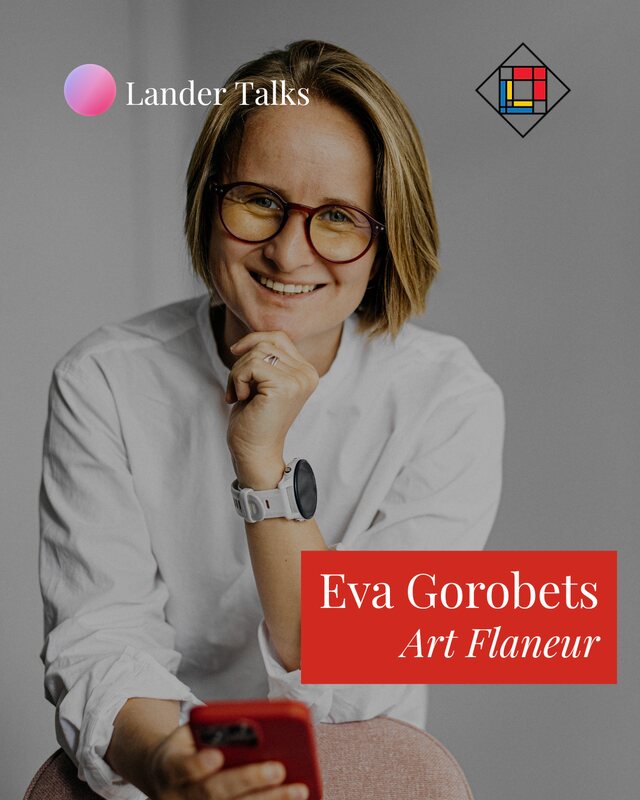
Eva Gorobets

Eva Gorobets

Art Flaneur

Explain to me what you do like I'm five years old.

I travel through cities, map galleries and museums and connect the dots between people who love art, people who don't know yet that they do, and the artists waiting for them. Art Flaneur is where they meet.

What are you working on right now?

A partnership with a surf photography festival in Queensland. We're building digital routes through the festival and collecting visitor behaviour analytics in places where data usually goes dark: beaches, bushland, spaces with no gates and no ticket scanners.

How did you get here?

I've been a professional photographer for 15+ years. I'm also a professional nomad: Kazakhstan → Italy → the UK → Russia → Australia, and very soon, Japan. In every place I lived, I found myself pulled into the local art scene. Art Flaneur was built for my partner and me first — we were tired of hunting across dozens of websites every time we arrived somewhere new.

What was the moment you nearly stopped, and what kept you going?

By 2025, two years in, we'd hit a ceiling. A database of over 13,000 galleries and museums and tens of thousands of exhibitions worldwide, but as a pure directory, the product had nowhere to go. Then we got into a Kyoto accelerator. Two months there changed everything — that's when the B2B & B2G layers were born, and we're moving to Japan soon.

What are you building towards that doesn't exist yet?

We call Art Flaneur Frankenstein: it brings together things that exist on the market, but are separate. We're free for galleries and artist-run spaces. We provide analytics on physical visitor behaviour, despite being digital. We've got a ticketing system. We offer media services: photo & video shoots, articles, guides, reviews. Is it complicated? Yes. That's exactly why it's interesting.

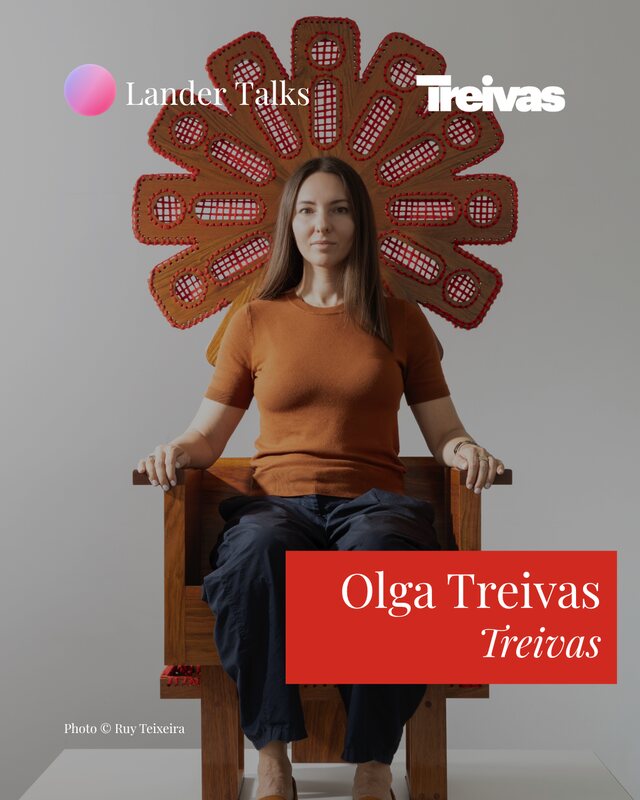
Olga TreivasOT

Explain to me what you do like I'm five years old.

I'm a museum architect: I can design an entire museum or just one part of it. But lately my work has shifted toward traditional craft techniques and smaller-scale objects, even something as simple as a chair, where every process can still be fully traced. Russian by birth, I've lived in Brazil for a long time. What interests me most now is the delicate boundary within myself between two profoundly different civilisations.

What are you working on right now?

At SP-Arte, the largest art fair in Latin America, I presented embroidered jatobá wood objects and totems in coloured crystal glass. I reinterpret the Brazilian expression tapar o sol com a peneira, "trying to hide the sun with a sieve." Accepting the irregularities of hand embroidery becomes a way of transforming imperfection into strength — I see something deeply feminine in that honesty.

How did you get here?

Brazil doesn't have a large Russian-speaking community. I had to move slowly through learning a new language while critically reassessing my achievements, professional relationships, and sense of identity. Trust takes years to build here, and becoming part of the local cultural landscape requires patience and initiative.

What was the moment you nearly stopped, and what kept you going?

To be honest, I never really stopped — I never stepped away from work after my pregnancies. At one point, though, I felt I had reached a glass ceiling here in Brazil and realised my main resistance came from an unwillingness to fully invest myself in the local culture, having already felt established elsewhere.

What are you building towards that doesn't exist yet?

I'm building a world rather than a collection; where craft, atmosphere, and emotion exist without hierarchy. We're developing educational and exhibition projects around traditional techniques, and every two years we'll focus on a new craft to draw attention to its cultural context and economic independence.

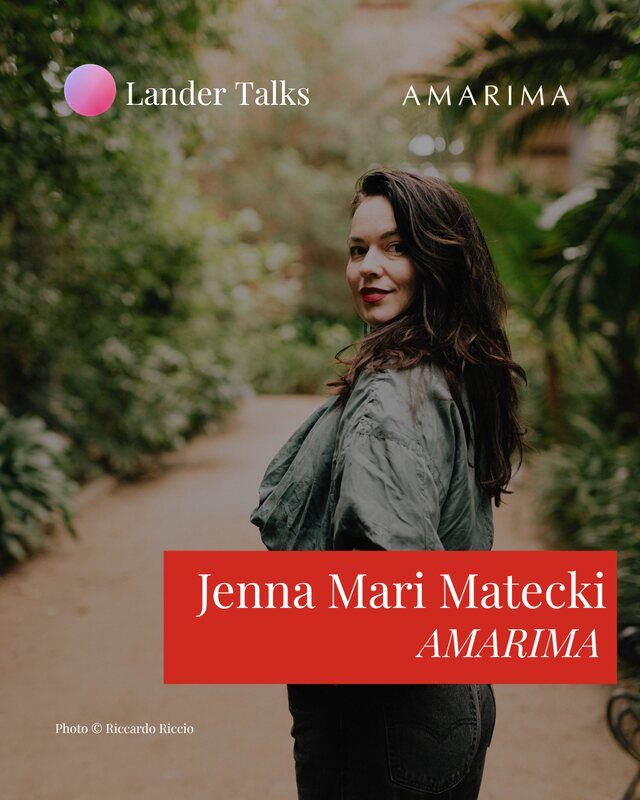
Jenna Mari MateckiJM

Jenna Mari Matecki

AMARIMA

Explain to me what you do like I'm five years old.

My team and I make magic happen. We strategize and design the experience of places and meaningful moments, beyond just what they look like. We study the psychology behind what people need to thrive and feel inspired, and we produce sculptures, art and design objects you can actually touch and enjoy. At AMARIMA we're the adults who haven't forgotten how to play.

What are you working on right now?

I'm the Founder of AMARIMA. Our divisions are EXPERIENCES (end-to-end experiential design and strategy), LABS (research into behavioural psychology and the future of experiences), and FORMS (haptic and sensorial art and design objects). We're building a new kind of luxury by connecting the dots across experience, science, and art.

How did you get here?

A decade building brand experiences, social impact and sustainability strategies; producing living labs like Barcelona's top coffee club of 1,500 people; a Swiss hospitality MBA; a book of short stories written while living as a nomad; eleven years living in New York City; starting my own company. I've been building AMARIMA for my whole life.

What was the moment you nearly stopped, and what kept you going?

I ended a relationship that was really bad for me and came out of it with just my cat Pomba in my backpack, a van full of art, books, and clothes, and a notebook with plans for AMARIMA. My best friends, family, and colleagues reminded me who I was, and kept me thinking big when all I wanted to do was hide.

What are you building towards that doesn't exist yet?

A world where we prioritize what we already know matters most.

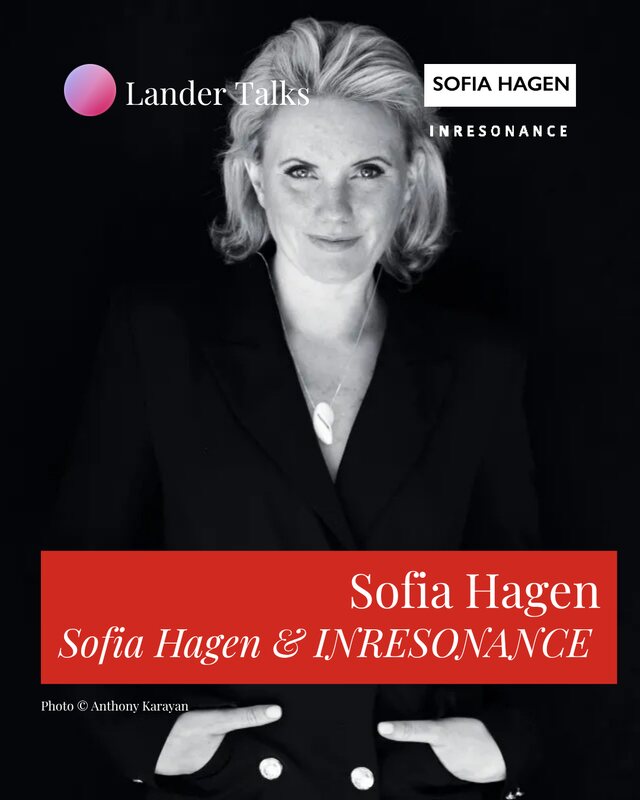
Sofia HagenSH

Sofia Hagen

Sofia Hagen & INRESONANCE

Explain to me what you do like I'm five years old.

I work at the intersection of art, design, technology, wellness innovation and cultural programming — combining circular design, recycled bio-based materials and advanced technologies to create human-centred products and experiences through large scale 3D printing. Note: 5-year olds usually understand this surprisingly well!

What are you working on right now?

A few projects in LA and Mexico, especially the recent launch of INRESONANCE — a platform where we curate retreats and installations exploring the relationship between biophilic design, sound design, spatial environments, and mental and physical wellbeing, alongside standalone installations such as the HEMPLA Recovery Pit-Stop at the Red Bull Athlete Performance Centre LA.

How did you get here?

I'm Austrian-Polish, studied architecture under Zaha Hadid in Vienna, then worked at Zaha's, Heatherwick, Acme Space, Make, and became design director at Design Haus Liberty before spontaneously starting my own venture in 2020. My passion made me focus on sustainable material research, Covid made me work with robots.

What was the moment you nearly stopped, and what kept you going?

Never. My current independent journey happened on an impulse, with no projects, clients or savings — but a fresh mortgage — at the end of 2019, right before 2020 hit. I was raised to never give up, so to keep going is part of my cultural upbringing. You will get hit by many a wave, you fall and tumble, but the important thing is to continue the ride.

What are you building towards that doesn't exist yet?

I guess we'll find out! All the R&D-heavy projects I've completed so far should eventually be applied to the design/construction industry at large scale, changing the methodology of our built environment through organic materials and efficient technologies that don't drain the planet's resources.

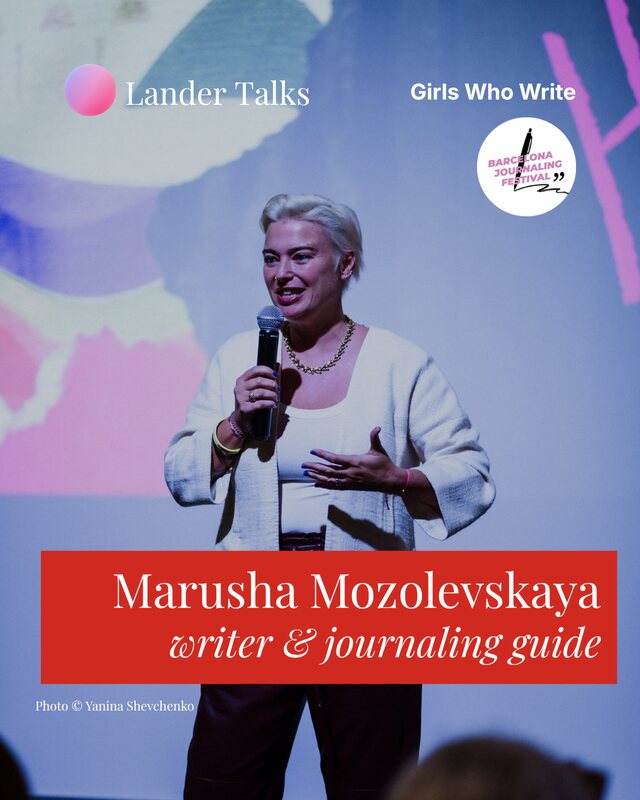
Marusha MozolevskayaMM

Marusha Mozolevskaya

Writer & journaling guide

Explain to me what you do like I'm five years old.

I invite women of all ages to play with words, and I help them find the joy in writing all sorts of things — a diary, essays, a memoir, or a non-fiction book. This is what my project, Girls Who Write, is about. I also organise and host the annual international Barcelona Journaling Festival, a 2-day expressive writing extravaganza for all the journaling lovers.

What are you working on right now?

Putting together this year's festival programme, selecting speakers and themes, while getting ready for my Girls Who Write retreat in Barcelona this July — and writing two books at the same time: Naked Words, a collection of my favourite journaling prompts, and my first attempt at fiction.

How did you get here?

By fearlessly stepping into the unknown. I didn't know journaling was an industry when I first started, or that I could create a festival from scratch. One thing I knew for sure was that I always loved writing, and that anyone can write something meaningful, even if it is not destined to become a bestseller.

What was the moment you nearly stopped, and what kept you going?

I used to be a travel journalist, paid to visit amazing destinations and write about them. When this chapter ended, I wondered how writing could still pay my bills — but I never considered quitting writing altogether. My wholehearted love for it helped me pivot my career from journalism to journaling.

What are you building towards that doesn't exist yet?

A global heart-centered community for writers who won't be scared that "AI will steal their jobs," because the writing they're into is pure soulwork that no robots will ever do for us. The pendulum is always swinging back — once humanity feels an even bigger need for analogue writing, we'll be there, ready.

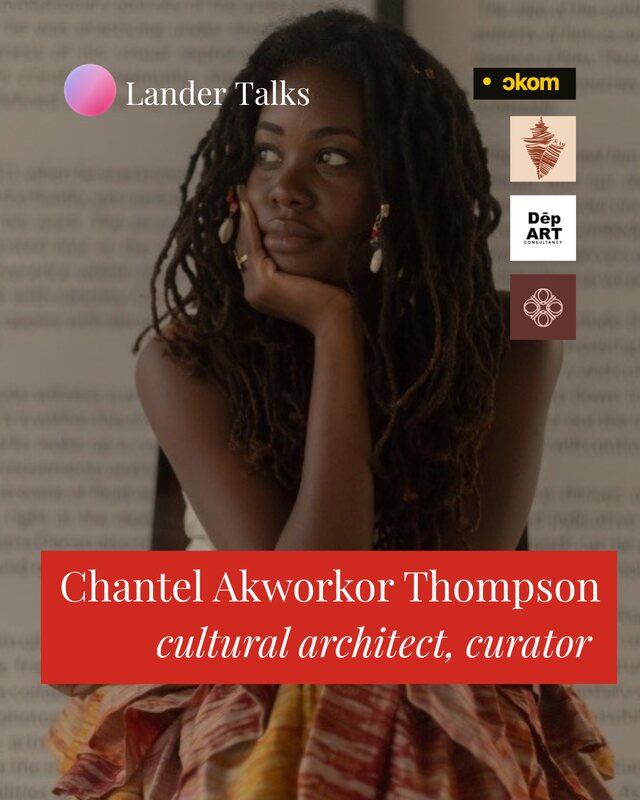
Chantel Akworkor ThompsonCT

Chantel Akworkor Thompson

Cultural architect, curator

Explain to me what you do like I'm five years old.

I love my culture. The music, the food, the colours, everything we create, and everything that has been created before us. So what I do is share and protect what these communities create, and make spaces for it to be celebrated — an art exhibition, a concert, or a lesson about people from these places.

What are you working on right now?

Multiple things — why focus when you can flutter. There's Akuraa, an ethical image licensing platform for African photography. ɔkom, a directory of Black and Pan-African organisations across 29 countries. DēpART Education, with a live curriculum, Photography as Living Archives. But the project that has my heart is Te Ase, a Pan-African sonic research and development initiative.

How did you get here?

My lineage is rich with institution builders. I was born into a working class household, single parent, 6 children, and had my first job before age 10. A scholarship to Suzi Earnshaw performing arts school changed everything. After lockdown I built a platform interviewing artists I admired; moving to Ghana in 2021 with no plan, I fell into writing for Gallery 1957 and curating for Amoako Boafo.

What was the moment you nearly stopped, and what kept you going?

Three key moments: experiencing sexual harassment and assault within the art scene; the exploitation of creatives when Western actors enter the African cultural space, which I wrote about and turned down money over; and, most recently, the passing of my twin sister. What remains is the clearest instruction I've ever been given: don't waste it.

What are you building towards that doesn't exist yet?

My great-grandfather chaired the all-African constitutional committee that preceded Ghana's independence; my grandfather founded a school; my grandmother held a chieftaincy. I used to think I had big shoes to fill — now I think I'm just the next one, building whatever comes after having something solid to stand on.

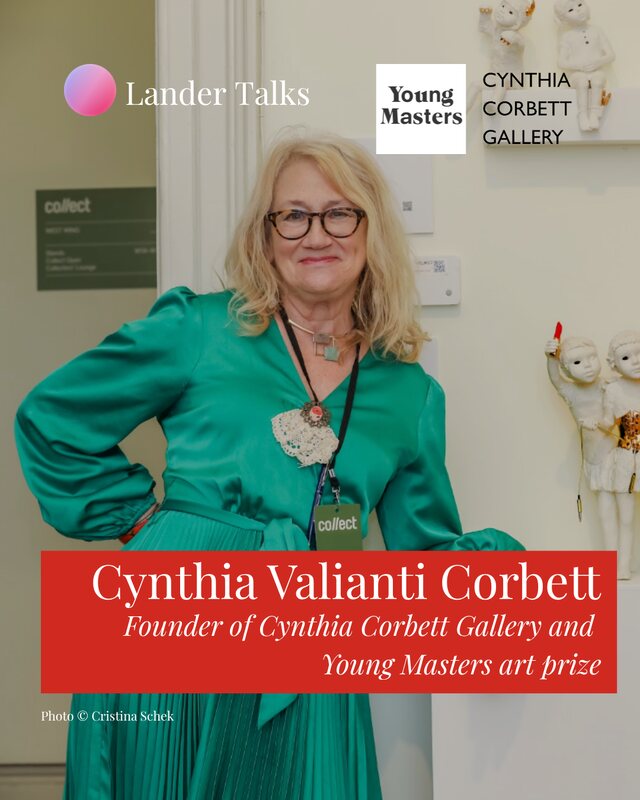
Cynthia Valianti CorbettCC

Cynthia Valianti Corbett

Founder, Cynthia Corbett Gallery & Young Masters

Explain to me what you do like I'm five years old.

I help artists share their ideas with the world. Sometimes I organise exhibitions, sometimes I help people discover artists they might love. I spend a lot of my time connecting creative people and creating opportunities for them to grow.

What are you working on right now?

Her Court, the first museum collaboration for Young Masters, created with Wimbledon Museum, exploring Wimbledon's connection to the suffragette movement through contemporary art — alongside developing Young Masters internationally and working through Cynthia Corbett Gallery with established and emerging artists.

How did you get here?

I didn't begin in the art world — my first career was in international economics and diplomacy. After starting a family I went back to study art history, which felt like a leap into the unknown, leading to founding the Cynthia Corbett Gallery in 2004 and Young Masters in 2009. It wasn't a reinvention; it was all the different parts of my life finally coming together.

What was the moment you nearly stopped, and what kept you going?

Like many founders, financial pressures, uncertainty and the sheer amount of work have felt overwhelming, and as an American in London I sometimes felt like an outsider. What kept me going was seeing artists develop their careers and gain opportunities — and I really love what I do.

What are you building towards that doesn't exist yet?

A world where contemporary artists are invited into museums, archives and historic spaces not as decoration, but as part of the conversation. Her Court feels deeply personal because the suffragette story is about courage, visibility and women refusing to disappear.

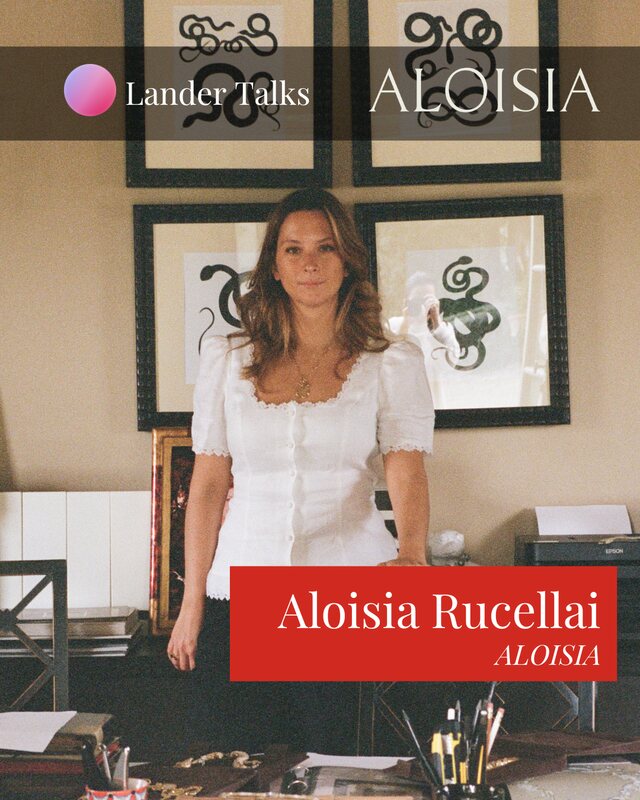
Aloisia RucellaiAR

Aloisia Rucellai

ALOISIA

Explain to me what you do like I'm five years old.

I lead a three-generation Florentine jewellery house founded by my grandmother in the 1950s. We create bespoke jewels that tell people's stories, sometimes upcycling clients' inherited pieces into something new while preserving the memories they carry. My job is to take a client's thoughts and transform them into a wearable object.

What are you working on right now?

Developing my family's bespoke jewellery house for a new generation, and reinterpreting my grandmother's extraordinary archive of over 600 original designs, bringing them into conversation with contemporary collectors who are once again embracing colour, enamel and playful design.

How did you get here?

I studied Art History and an MA in Art Business specialising in jewellery and gemstones, then spent years in cultural communications. I left my agency career to join my father full-time when he unexpectedly passed away, suddenly carrying forward both his legacy and my grandmother's.

What was the moment you nearly stopped, and what kept you going?

Nothing has ever made me want to stop. The uncertainty of leaving a stable career made me question the leap, but knowing I was preserving a creative legacy while giving it a future kept me going, alongside a lifelong fascination with gemstones.

What are you building towards that doesn't exist yet?

The next chapter of ALOISIA, through original designs that honour our heritage while speaking to today's collectors.

Get in touch

Let's have a chat.

Know someone building something extraordinary in the cultural economy? We'd love to hear from you.

Anastasia Lander
+44 7957 114873
anastasia@landerlander.com
Victor Lander
+44 7957 114963
victor@landerlander.com
Visit us
Somerset House Exchange
Strand, London WC2R 1LA